

What is a Facial Base Primer? Why You Should Use It Before Foundation

What is a Facial Base Primer? Why You Should Use It Before Foundation
A Facial Base Primer is an essential skincare and makeup item that prepares your skin before applying foundation. It not only controls oil but also acts as a bridge between your skin and makeup, smoothing the skin, filling in pores, and making makeup last longer. Especially in hot and humid climates like Thailand, modern primer formulations now often include skincare benefits such as sunscreen, vitamin C, or hyaluronic acid to keep the skin hydrated throughout the day.
For brand owners looking to create a unique Facial Primer, OEM cosmetic manufacturers and GMP-certified factories are the ideal partners. They can develop formulas tailored to market needs, including texture, color, and ingredients suitable for Thai skin, while also providing packaging design and marketing consultation. Choosing a certified factory is the key first step in building a quality cosmetic brand with long-term growth potential.
——————————————————————————————–
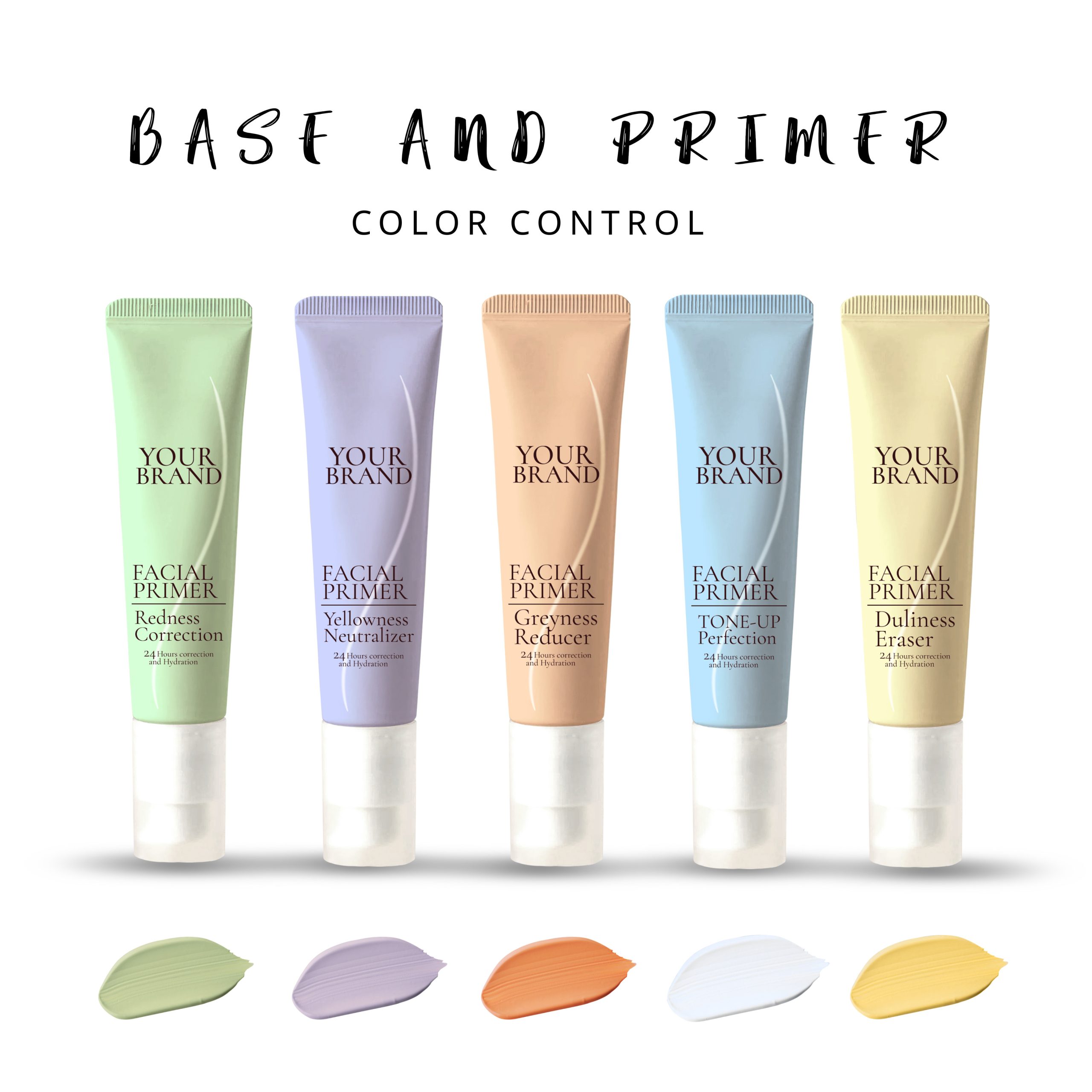
5 Colors of Facial Base Primer: Who Are They For & How to Use Them
Facial Base Primers come in different shades to target specific skin concerns and even out skin tone before foundation:
- Green: Reduces redness from acne or sensitive skin; ideal for fair to medium skin with noticeable redness.
- Yellow: Covers dark circles, light brown tones, or purple bruising.
- Orange: Suitable for medium to tan skin; hides very dark under-eye circles.
- Pearl White: Brightens dull, dry skin.
- Purple: Neutralizes yellow undertones, giving the skin a lively, bright appearance.
- Pink: Adds a healthy rosy glow; suitable for all skin tones.
How to Apply Primer: Use a small amount and blend lightly. Avoid rubbing harshly or layering too much, as this can cause caking. Choosing a product suitable for your skin is also important.
Many OEM factories now develop primers specifically for Asian and Thai skin tones, ensuring the product meets market needs effectively.
Share the formula for choosing a Base Primer according to your skin tone and specific problems.
Choosing the perfect base primer involves more than just matching your skin tone. To achieve the most flawless makeup application, you also need to address your specific skin concerns.
- Purple: Neutralizes yellow undertones, giving the skin a lively, bright appearance.
- Green: Reduces redness from acne or sensitive skin; ideal for fair to medium skin with noticeable redness.
- For tan skin with redness: Green is still a good solution, but choose a lightweight formula that won't make the face look ashy.
- Orange: Suitable for medium to tan skin; hides very dark under-eye circles.
- Pink: Adds a healthy rosy glow; suitable for all skin tones.
- Pearl White: Brightens dull, dry skin.
Quality OEM cosmetic manufacturers often have proprietary formulas that can be customized for the target audience, using safe color-adjusting pigments that meet GMP factory standards to ensure the product can be used daily without irritation.
If you are a brand owner looking to create a unique and effective Facial Primer, an OEM cosmetics manufacturer that understands how to merge primer formulas with specific skin concerns is crucial for building a quality brand with long-term growth potential.
One common skin concern is redness, especially for sensitive or acne-prone skin. Applying heavy foundation isn’t always the solution, as it may clog pores and worsen acne. Green primers help blur redness professionally by neutralizing red tones on the color wheel.
Applying green primer to red areas reduces the intensity without heavy foundation.
GMP-Certified Factory Formulations:
GMP-certified factories often include soothing ingredients like Centella Asiatica, green tea, and aloe vera in green primers to reduce irritation while allowing the skin to breathe.
High-quality OEM primers are non-comedogenic, fragrance-free, and dermatologically tested.
How to Use:
- Apply your usual skincare for hydration.
- Dot the green primer on red areas: around the nose, cheeks, or acne spots.
- Blend lightly with a brush or sponge.
- Apply foundation or cushion on top.
Proper use of green primer reduces the need for heavy foundation, giving a lightweight, smooth, and natural finish suitable for both full makeup and clean looks.
A Purple Facial Base Primer is ideal for those with dull, lackluster skin, or a strong yellow undertone that can make the face look tired. The purple base works to counteract yellow tones, balancing the complexion and making the skin appear brighter and more luminous naturally.
Key Features of Modern Purple Primers
New-generation purple base formulas are often developed by cosmetics manufacturers using pigment dispersion combined with soft-focus technology, which creates a lightweight texture that still blurs pores effectively.
Expert cosmetic OEMs will adjust the level of purple pigment to a value that prevents the face from looking gray or ashy—a common issue with older products, especially on Asian skin tones.
Application Technique for a Healthy Glow
- Apply a thin layer all over the face, focusing on the T-zone.
- Follow up with a glow-formula foundation or a tinted moisturizer.
- Finish with a cream highlighter on the high points of the face.
The Result: Skin looks instantly brighter without needing a filter and is perfect for the clear, dewy look popular in Korea and Japan.
In the past, orange bases were often used only for fashion or stage makeup, but with new technology from GMP-certified cosmetics factories, formulas are now available for practical, everyday use, especially for those with tan or medium-to-dark skin tones.
Orange is suitable for concealing dullness, particularly in areas with a purple hue like under the eyes, the corners of the mouth, and various dark spots. It helps to adjust the skin, making it appear warmer and more even-toned.
Cosmetic OEMs and Developing Formulas Specifically for Asian Skin
Choosing a cosmetics manufacturer that understands Thai skin tones is crucial because a good orange base should be usable on dark skin without looking ashy or distorting the foundation's shade. A quality OEM can perfectly balance the ratio of pigment and base texture.
How to Use for a Natural, Non-Dull Finish
- Use a very small amount on areas that need brightening, such as under the eyes and the corners of the mouth.
- Blend it smoothly before applying foundation.
- Use a foundation that matches your skin perfectly or has a neutral tone.
For those who prefer a sun-kissed or warm bronze makeup look, an orange base is a basic item that shouldn't be overlooked.
A white or pearl base primer is a base that provides a glossy, shimmery, and dimensional effect. It is perfect for natural or "no-makeup makeup looks" that focus on healthy-looking skin rather than heavy coverage.
This type of base often contains ingredients like mica or pearl powder and is typically developed by GMP-certified cosmetics manufacturers that have technology to control the particle size of the shimmer for a fine, light-diffusing effect that isn't too obvious.
Key Features of Formulas from OEM Cosmetics Factories
- Non-sticky
- Doesn't cause foundation to look cakey
- Can be used both before and after foundation
Tips for Applying the Base for a Natural Glow
- Apply on cheekbones, the bridge of the nose, the center of the forehead, and the chin.
- Use it as a subtle cream highlighter.
- Or, mix a small amount with foundation to give the entire face a luminous finish.
Ideal for outdoor photos, weddings, or casual days when you want the skin to have a natural-looking glow.
Last but not least, a yellow base is another item that makeup lovers shouldn't miss, as it can help solve a variety of issues, whether it's dark spots, under-eye circles, or uneven skin patches. This base helps to neutralize the skin tone, making foundation application easier.
Why Do Cosmetics Manufacturers Recommend This Color?
Because a yellow tone can be used with all undertones—warm, cool, and neutral—it is very suitable for the Southeast Asian market with its diverse skin conditions. Many cosmetic OEMs use a yellow base as the starting point for "smart skin" makeup products, which focus on concealing flaws without heavy application.
How to Use for the Best Results:
- Apply a thin layer only on areas with dark circles or spots.
- Blend with a small brush for precision.
- Use it with a buildable coverage foundation.
A yellow base is therefore the secret item of professional makeup artists who want to achieve a flawless finish without caking on thick layers.
How to Use Facial Base Primer to Make Foundation Last All Day
Skin prep tricks and the makeup application order to help lock your makeup in place all day.
One of the most common problems is foundation not lasting throughout the day, especially for those with oily or dry skin, or when wearing makeup in hot and humid climates. Using a Facial Base Primer correctly is the key to helping makeup adhere, keeping skin looking smooth, and preventing it from melting off.
Why Use a Facial Base Primer Before Foundation?
A primer is a product that creates a thin layer between your skin and foundation, which helps control oil, minimize pores, smooth the skin’s texture, and make foundation adhere longer. This is especially true for products developed with OEM cosmetics manufacturers, who can tailor textures and ingredients for Thai skin, such as a silicone-based texture for oily skin or a lightweight gel for dry skin.
Correct Steps for Applying Facial Base Primer
- Start with light skincare – apply a moisturizer or serum for hydration first.
- Dot the primer on key areas – the sides of the nose, forehead, cheeks, and chin, then blend with your fingers or a brush.
- Let it set for 1–2 minutes – before applying foundation to prevent the creams from mixing together.
- Apply a thin layer of foundation and then build it up – this method achieves a smoother skin finish.
Long-Wear Technology in GMP Factories
Primers developed with GMP-certified factories often use film-formers and micro-blur technology to lock skin texture without heaviness. Makeup can last 8–12 hours, perfect for long workdays or outdoor events.
If you are a brand owner looking into cosmetics, skincare, and dermaceutical manufacturing for makeup primers, be sure to consult with specialized OEM manufacturers about adhesion technology and diverse textures.
Which Facial Base Primer Color is Best for Work Makeup to Look Fresh but Not Over-the-Top?
Recommended Natural-Looking Base Colors for an Office Look
Work makeup requires a "balance" between looking professional and looking fresh. The choice of Facial Base Primer significantly impacts your daily image because the base color adjusts the skin to look healthy without heavy makeup.
Recommended Base Tones for an Office Look
- Green: Suitable for those with redness from acne or sun sensitivity. Apply it as a spot treatment before foundation.
- Purple: Helps brighten a dull, yellow complexion. Ideal for those who look pale or haven't had enough sleep.
- Pink/Pearl White: Helps the face look rosy and radiant, like a healthy female executive.
- Yellow: For those with uneven skin tone or dark spots, it helps neutralize the skin's color.
Cosmetic OEMs That Emphasize Naturalness and Practical Everyday Use
Many brands targeting the working professional makeup market choose to create their formulas with GMP-certified cosmetics manufacturers that focus on a natural look, without excessive glitter or shimmer. They opt for pigments that provide a "Soft Focus" finish, which is ideal for daily makeup.
Makeup Application Order:
- Apply skincare – then apply the color base as a spot treatment.
- Use a lightweight foundation, such as a BB Cream or a water-based foundation.
- Lightly dust with loose powder for a matte but not dry look.
- Add a touch of peach-toned blush and a nude or natural pink lip color.
For brands aiming to penetrate the "Working Woman" market segment, choosing to develop products with a cosmetics OEM that has data insights into real-world usage behavior is a shortcut to success.